Flavor ingredient regulatory record
Pyrazine
Pyrazine is a pyrazine in the nutty family, FEMA GRAS under FEMA number 4015 (CAS 290-37-9). Its odor is nutty, roasted, earthy, chocolate, popcorn.
- FEMA
- 4015
- CAS
- 290-37-9
- JECFA
- 951
- EU FL
- 14.144
- Formula
- C4H4N2
- EC
- 206-027-6
GRAS status: FEMA GRAS, publication 20. Recorded by FDA in the Substances Added to Food inventory under CAS 290-37-9.
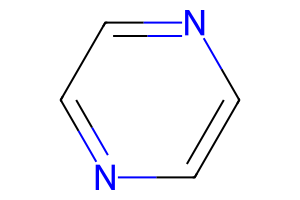
Structure
Identity
Also known as: 1,4-Diazabenzene, 1,4-Diazine, Paradiazine, Piazine, p-Diazine, NSC 400221, 1,4-diazine, p-diazine, paradiazine, piazine, 1,4-diazabenzene, pyrazin.
Can Pyrazine be labeled natural?
The process decides for pyrazine. It occurs in nature, so a natural-source, natural-process material is natural flavor in the US and synthetic pyrazine is artificial. In the EU and UK the natural claim likewise needs the natural route, while Mercosur and Mexico keep a third class, identical-to-natural, for the synthetic material.
- United States
- Natural or artificial, by process
- European Union and UK
- Natural only from natural material
- Mercosur and Mexico
- Natural or identical-to-natural
How each market defines the classes: natural vs artificial flavor under 21 CFR 101.22.
Regulatory status, with citations
United States
Pyrazine is FEMA GRAS under FEMA number 4015. It is cited in the Code of Federal Regulations at 21 CFR 172.515.
European Union and United Kingdom
Listed on the Union List of flavouring substances as FL 14.144, Annex I Part A under Regulation (EC) 1334/2008, evaluation status approved (EFSA). The UK retains the same list.
JECFA (WHO / FAO)
JECFA number 951, evaluated at the 57th meeting in 2001. No safety concern at current levels of intake when used as a flavouring agent.
Other US flags
Not on the California Proposition 65 list.
TSCA Inventory status
A flavor ingredient is also an industrial chemical. Pyrazine appears on the EPA Toxic Substances Control Act Chemical Substance Inventory under CAS 290-37-9, where EPA names it Pyrazine.
Active in US commerce
EPA designates this substance active, so no Notice of Activity Form B is required before manufacturing. What active and inactive mean.
EPA publishes no regulatory flags on this listing. What the flags mean.
From the EPA non-confidential TSCA Inventory, July 2026 release. EPA also maintains a confidential portion it does not publish. Search the Inventory by CAS number.
Odor and taste
Odor: Nutty, roasted, earthy, chocolate, popcorn.
Taste: Savory, umami, roasted.
Where it is used
Pyrazine is used in snacks, savory dishes, seasonings and beverages, typically as a nutty note.
Structurally similar flavor ingredients
Flavor ingredients with a GRAS determination closest to Pyrazine by structure. Whether one can replace it is a sensory and regulatory call; the reformulation tool works that through.
| Material | FEMA | Similarity | Occurrence |
|---|---|---|---|
| 2-Pyridine | 2966 | 90% | In nature |
| Piperazine | 4250 | 82% | In nature |
| 2-Methylfuran | 4179 | 77% | In nature |
| Piperidine | 2908 | 77% | In nature |
| 2,3-Dimethylpyrazine | 3271 | 66% | In nature |
More pyrazines in this index
2,5-Dimethylpyrazine · 2,3,5,6-Tetramethylpyrazine · 3-Acetylpyridine · 2-Acetyl-3-ethylpyrazine · 2-Acetyl-3-methylpyrazine · 2,3-Diethyl-5-methylpyrazine
Pyrazine FAQ
Does pyrazine have FEMA GRAS status?
Pyrazine holds FEMA GRAS status under FEMA number 4015. The Code of Federal Regulations lists it at 21 CFR 172.515.
How do I cite pyrazine by FEMA or CAS number?
Cite pyrazine as FEMA 4015 or CAS 290-37-9; both point to the same entry. Its flavor category is nutty.
What does pyrazine smell and taste like, and where is it used?
The odor of pyrazine is nutty, roasted, earthy, chocolate, popcorn. On the palate it is savory, umami, roasted. Typical uses are snacks, savory dishes, seasonings and beverages.
What did JECFA conclude about pyrazine?
JECFA evaluated pyrazine at the 57th meeting in 2001 under JECFA number 951. The panel concluded: No safety concern at current levels of intake when used as a flavouring agent.
Can pyrazine be used in the EU and UK?
Yes. FL 14.144 is the Union List entry for pyrazine, annex I Part A, under Regulation 1334/2008, and the UK keeps the same list.
Can pyrazine be labeled a natural flavor?
Nature makes pyrazine, which is why the US label turns on process. A natural route gives natural flavor; synthesis gives artificial pyrazine, same molecule. The EU and UK follow the same logic without a middle class; Mercosur and Mexico label synthetic pyrazine identical-to-natural.
Ingredient lookup
Check an ingredient
Start typing to search the ingredient corpus.
Or browse every ingredient page, A to Z.
Guides: What Is FEMA GRAS? · Natural vs artificial · Filing a GRAS notification
Check Pyrazine in a formula
Screened against FEMA GRAS, 21 CFR and EU rules as you build. Free to start.
Sources and attribution. The identity and regulatory facts on this page are taken from the FDA Substances Added to Food inventory, a US government record, which lists this substance as PYRAZINE under CAS 290-37-9 and carries its FEMA number, its JECFA flavor number. The inventory is searchable at FDA. FDA records its technical effect as flavoring agent or adjuvant.
A FEMA GRAS conclusion is reached by the Expert Panel of the Flavor and Extract Manufacturers Association of the United States, and the FEMA number names that conclusion. FEMA publishes its own entry for this substance in the FEMA Flavor Library, which is the authoritative record of what the Panel decided and is worth reading alongside this page.
Ambrose Compliance is not affiliated with, endorsed by, or sponsored by FEMA. FEMA and FEMA GRAS are used here as identifiers for a published regulatory determination, not as marks of any relationship between FEMA and Ambrose.
About this page. Facts come from the FDA Substances Added to Food inventory, the Code of Federal Regulations, the EPA TSCA Inventory, the EU Union List, JECFA and the Ambrose database, with FEMA's published determination cited where it applies; parts of the text are written by Ambrose AI, which can make mistakes. Check the cited source before relying on anything here. This is not regulatory or legal advice.